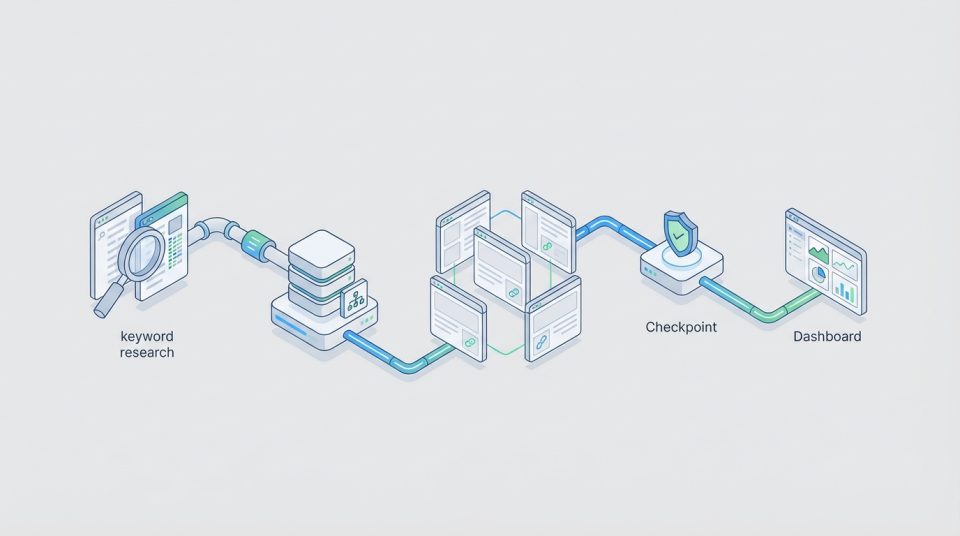
A single source of truth is a shared, governed way to define and reproduce the numbers your teams run the business on—so marketing, sales, finance, and product stop arguing about “whose dashboard is right.” It works by standardizing definitions, identity resolution, and transformations, then enforcing quality checks and change control across the full data lifecycle.
If you’ve ever watched a forecast meeting derail into a debate about ARR (Annual Recurring Revenue), MQLs (Marketing Qualified Leads), or churn (the rate at which customers stop doing business with a company), you’ve already found the problem this playbook solves. The goal isn’t to centralize everything in one tool; it’s to make metrics trustworthy, explainable, and repeatable—especially as your stack and team grow.
In practice, building a single source of truth ensures that every team operates from the same trusted dataset and consistent metric definitions.
What a Single Source of Truth Really Means (and What It Doesn’t)
A single source of truth is less about picking a “winner” system and more about agreeing on how the business measures reality. In practice, it’s a managed layer—often in a warehouse or lakehouse—where entities (accounts, users, subscriptions) are resolved consistently and where metrics are derived from documented logic.
It also comes with expectations: your data layer should show where a number came from, when it was last refreshed, and what changed since last quarter. If stakeholders can’t trace lineage or reproduce results, you don’t have trust—you have a fragile reporting artifact.
SSOT vs “one database” vs “one dashboard”
“One database” is an infrastructure choice; it can still produce conflicting answers if definitions and transformations differ across teams. “One dashboard” is a packaging choice; it can hide disagreements until the next time someone exports raw data and recalculates the metric.
A single source of truth is the discipline that prevents those disagreements. It combines data integration, data quality controls, and shared semantic definitions so that multiple tools can exist—without multiple truths.
Why Companies Need a Single Source of Truth
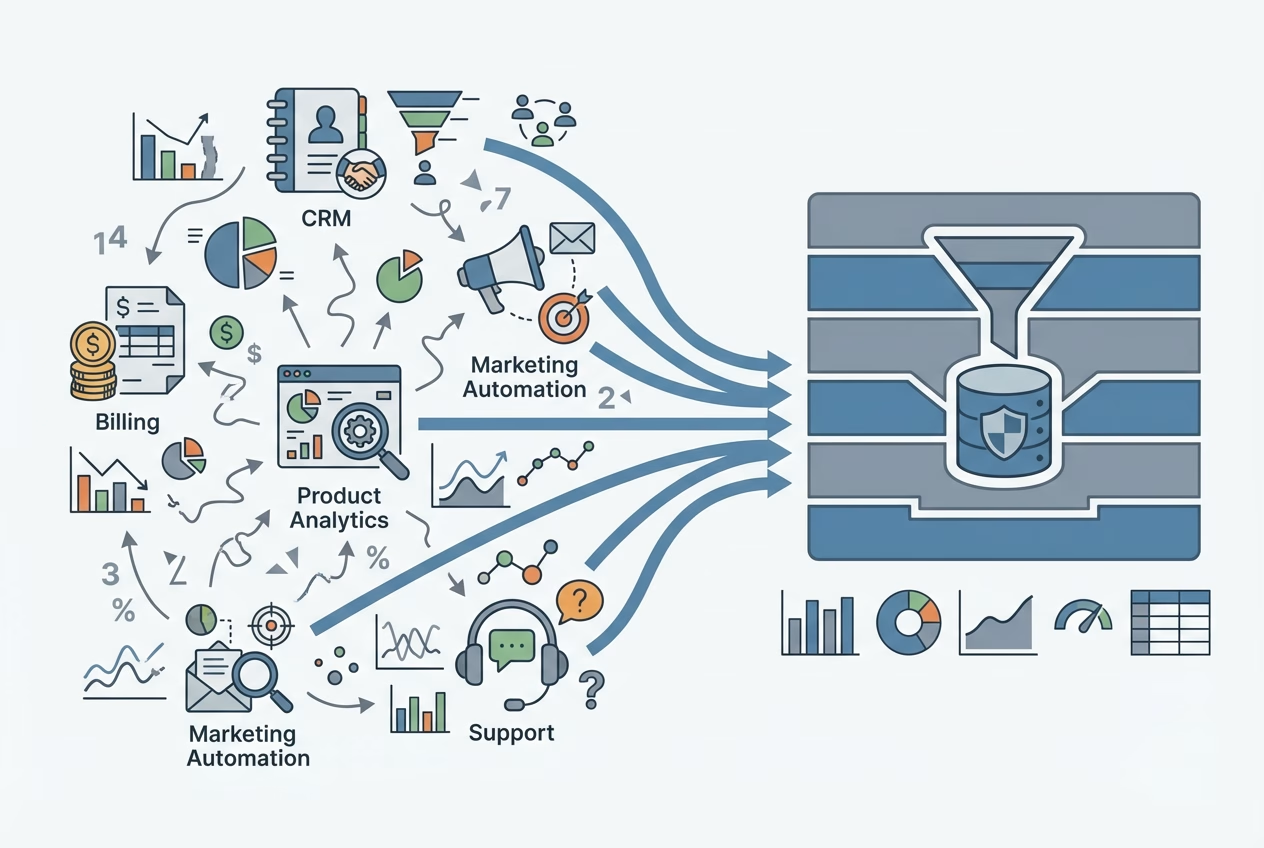
Growing SaaS companies rely on many systems: CRM platforms, billing tools, product analytics, marketing automation, and support platforms. Each system may represent part of the business accurately, but without integration, they produce conflicting answers.
A single source of truth brings these systems together and standardizes how entities such as accounts, users, and subscriptions are defined. When identity resolution and metric definitions are aligned, teams gain confidence that they are measuring the same reality.
Without a single source of truth, companies often struggle to reconcile data across CRM, billing, and product analytics platforms.
Why SSOT Breaks: The Most Common Failure Modes
Most initiatives to build a single source of truth don’t fail because of technology choices. They fail because the organization treats the work as a one-time migration instead of an ongoing operating model.
When trust drops, teams return to spreadsheets and ad hoc exports. Even a well-built data foundation won’t deliver value if decision-makers no longer believe the “official” numbers.
Metric definition drift
Metrics drift when definitions are implicit or copied into separate dashboards without shared documentation. ARR is a classic example: billing events, credit notes, expansions, downgrades, and contract start dates can all be “correct” depending on the use case.
Example: Marketing reports activation as a user reaching a feature within seven days, while product analytics defines activation as completing onboarding within 24 hours. Both are reasonable definitions, but without a single source of truth, leadership sees two activation rates and assumes someone is wrong.
Identity and join-key issues
B2B stacks contain many identifiers: CRM uses account records, product analytics uses device identifiers, and billing uses subscription IDs. Without deliberate identity resolution, metrics such as retention and lifetime value become unreliable.
A practical single source of truth resolves this through canonical entity tables and mapping rules that define how records connect across systems.
Weak ownership
If no one owns a metric end-to-end, changes happen quietly. Filters get adjusted, time windows shift, and dashboards evolve without documentation. Over time, these small modifications erode trust in the reporting layer.
Governance, documentation, and ownership keep a single source of truth durable rather than temporary.
Choose Your SSOT Architecture
There is no universal architecture for a single source of truth. The right approach depends on analytical needs, data sources, and business complexity.

Warehouse-centric approach
Many organizations build their single source of truth within a data warehouse or lakehouse. Raw data from CRM (Customer Relationship Management), billing, and product systems is integrated and transformed into curated models.
Modern platforms like
https://www.snowflake.com
make it easier to manage large-scale analytical workloads and standardized transformations.
CRM-first approach
Some organizations initially treat the CRM as their single source of truth, particularly when pipeline metrics dominate reporting. This works well for early-stage companies, but often becomes limiting when product and marketing data must be integrated.
CDP-centered architecture
Customer data platforms can support identity resolution across marketing and product channels. In many cases, the CDP contributes to the single source of truth, while the warehouse handles financial metrics such as revenue and subscription data.
| Pattern | Best fit | Trade-offs |
|---|---|---|
| Warehouse/lakehouse-centric | Complex metrics, many sources, strong analytics needs; scalable data integration and modeling | Requires disciplined modeling, documentation, and data quality monitoring to avoid “data swamp” |
| CRM-first or billing-first system of record | Early-stage GTM, simpler reporting, or when one system is clearly authoritative for key fields | Harder to unify product and marketing signals; limited flexibility for multi-touch attribution and behavioral metrics |
| CDP-centered approach | Event-heavy journeys, identity resolution across channels, activation/retention use cases | May not cover finance-grade metrics (ARR, revenue recognition) without a warehouse-grade transformation layer |
The SSOT Implementation Playbook
Implementing a single source of truth is less about building infrastructure and more about designing a repeatable path from raw data to reliable metrics.
Step 1: Align on key business metrics
Start by identifying the metrics that leadership debates most often: ARR, churn, customer acquisition cost, and activation. Stabilizing these metrics first delivers immediate value.
Step 2: Map data sources and entities
List every system contributing to these metrics—CRM, billing, product analytics, and marketing automation—and define how core entities relate.
This mapping becomes the backbone of the single source of truth.
Step 3: Define metric specifications
Every metric should include documentation describing inputs, filters, and time windows. These specifications prevent definitions from drifting over time.
Step 4: Build transformation layers
Separate raw ingestion from transformation logic. A layered architecture protects the single source of truth from upstream changes and simplifies debugging.
Step 5: Validate with reconciliation
Reconcile warehouse metrics against source systems to confirm accuracy.
Example: Monthly recurring revenue calculated in the warehouse should match totals reported by the billing platform. Reconciliation builds trust in the single source of truth.
Step 6: Publish dashboards with definitions
Dashboards should present both metrics and definitions so stakeholders understand how numbers are derived.
Publishing documentation alongside dashboards reinforces confidence in the single source of truth.
Governance and Operating Model
Governance is what keeps your single source of truth from decaying as the business changes. Without it, definitions drift, pipelines break quietly, and teams fall back to their extracts because it feels faster in the moment.
The most effective governance models are lightweight but explicit. They assign decision rights (who can change what), define service levels for data reliability, and document the logic so a metric can survive team turnover.
RACI for data ownership (source owners vs metric owners)
Split ownership into two layers: source owners (who ensure CRM fields, billing events, and tracking plans are captured correctly) and metric owners (who define and approve the metric logic). RevOps often owns pipeline and lifecycle metrics, Finance owns revenue definitions, and Data/IT owns platform reliability—but the point is clarity, not a specific org chart.
When the owner is clear, requests become decisions instead of debates. It also helps you manage “local optimizations,” where one team changes a definition to make their numbers look better, unintentionally breaking downstream reporting.
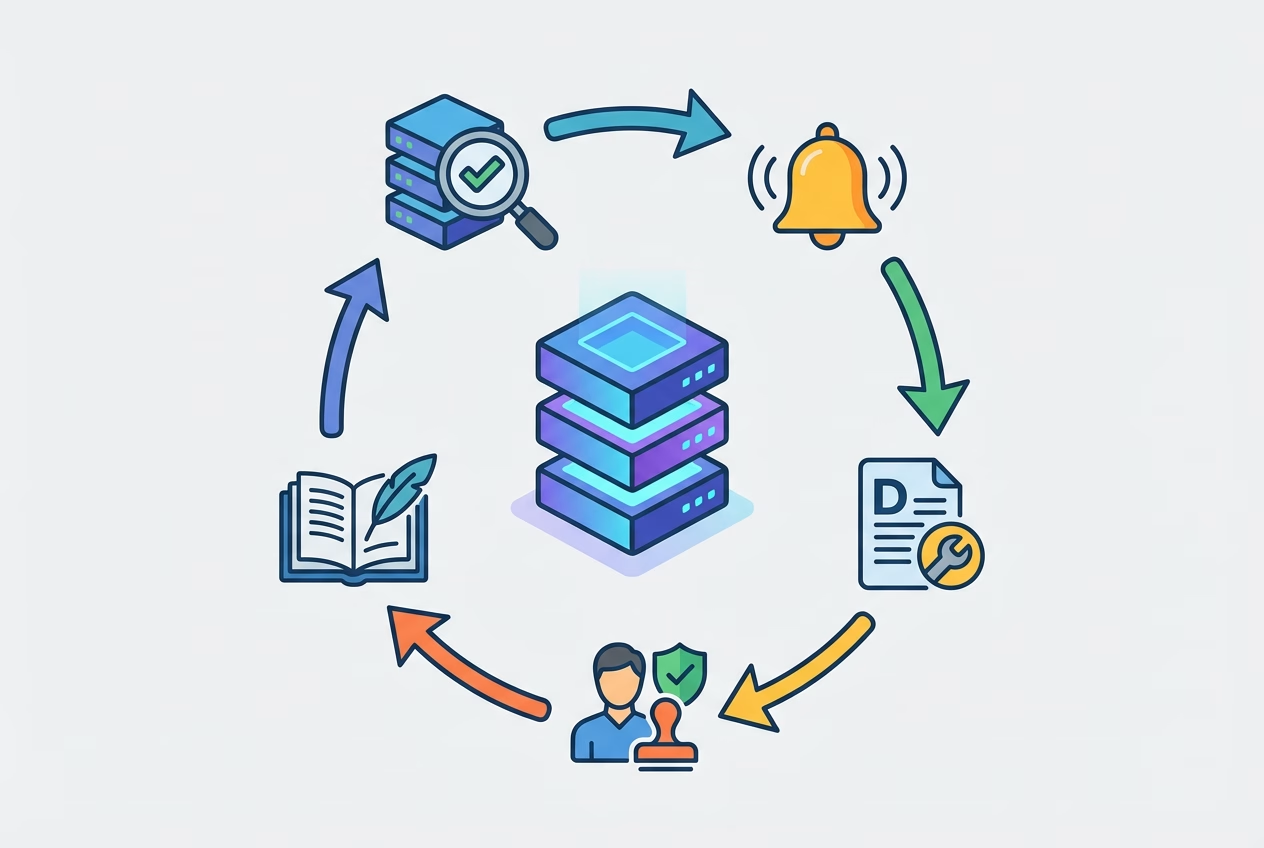
Data quality SLAs, alerts, and incident workflow
A reliable SSOT depends on measurable data quality: freshness (is it updated on time?), completeness (are required fields populated?), and accuracy (does it reconcile to sources?). Define SLAs that match the decision cadence—daily for pipeline movements, monthly for financial closes, and near-real-time only when there’s a true operational need.
When something breaks, treat it like an incident: identify impact, notify stakeholders, apply a fix, and add a regression check. Over time, these feedback loops reduce fire drills and improve confidence in the single source of truth.
Documentation, lineage, and versioning for metric changes
Documentation should answer three questions: what the metric means, how it’s computed, and what changed. Lineage matters because stakeholders don’t just want a number—they want to know whether the number is comparable to last quarter and whether it’s safe to base a decision on it.
Versioning isn’t only for engineering teams. Treat metric definitions as living artifacts with release notes, so business users can understand shifts without re-litigating the entire model.
Tooling and Integration Considerations
Tools do not create truth by themselves, but they help maintain reliable pipelines and transformations. ETL processes, event tracking standards, and access control policies support the integrity of the single source of truth.
Event tracking hygiene is particularly important. If product events change unexpectedly, activation and engagement metrics may fluctuate for reasons unrelated to customer behavior.
Organizations should also ensure appropriate privacy and security controls when integrating CRM, product, and support data into the single source of truth.
How to Measure SSOT Success
The best sign that a single source of truth is working is behavioral change within the organization.
When stakeholders trust the numbers, meetings focus on strategy rather than data reconciliation.
Reduced time-to-answer
Executives can quickly answer recurring questions because the single source of truth produces consistent results.
Improved data quality
Monitoring freshness, completeness, and reconciliation metrics ensures the single source of truth remains accurate.
Higher adoption
Dashboard usage and references in planning meetings indicate that teams rely on the single source of truth for decision-making.
Next Steps / CTA
If your reporting feels fragile, start by stabilizing the few metrics leadership relies on most. Once those metrics are governed, expanding coverage becomes easier, and your single source of truth becomes a durable asset.
A focused audit can identify where metrics conflict, where join keys break, and which transformations are undocumented. These insights provide a roadmap for strengthening the single source of truth across your organization.
If you’re also working on improving your data-driven marketing strategy, you may find our guide helpful:/blog/data-driven-marketing-strategy
The end
A focused audit can uncover why numbers conflict. Data fragmentation is a common challenge for growing SaaS companies. Multiple systems generate valuable insights, but without alignment, they produce conflicting narratives.
Establishing a single source of truth allows organizations to standardize definitions, reconcile data across systems, and build trust in the numbers that guide strategy.
Companies that successfully maintain a single source of truth create a durable competitive advantage in how they use data. Over time, the organization spends less time debating numbers and more time acting on insights.
If your team is struggling with inconsistent reporting or disconnected systems, building a single source of truth is often the most impactful step toward better decision-making.
At Streamline Digital, we help B2B companies design data infrastructure, analytics systems, and reporting frameworks that create a reliable single source of truth across marketing, sales, product, and finance.
Learn more about our work at
👉 https://stremelinedigital.com