High-intent SEO pages convert because they align on-page content with evaluation-stage searches, then remove friction to the next step (demo, trial, or contact). The fastest path is to target bottom-of-funnel SEO queries, publish the right page types (product, integrations, comparisons, pricing), and design each page to rank and persuade. Done well, high-intent SEO pages become predictable pipeline assets—not just traffic generators.
Most B2B teams say they want “more organic leads,” but publish primarily informational content that attracts readers who aren’t choosing a vendor yet. That gap is why traffic climbs while demos stay flat. Closing it requires treating keyword intent as a buying signal and building high-intent SEO pages that answer vendor-selection questions with proof, clarity, and an obvious next step.
Defining “High Intent” in High-Intent SEO Pages
In B2B and SaaS, “high intent” isn’t a vibe—it’s evidence. A search becomes high intent when it indicates a buyer is evaluating options, comparing vendors, or validating requirements before taking a sales action. High-intent SEO pages work because they match that moment with decision-ready content instead of educational overviews.
Most SEO programs fail because their content calendars prioritize volume (top-of-funnel topics) over commercial outcomes. You end up with broad articles that rank, but they don’t map cleanly to the SEO needs of product pages, the buyer’s job-to-be-done, or the questions procurement and security will ask before approval.
Informational vs commercial vs transactional intent
Informational intent is learning: definitions, “how-to,” and frameworks. Commercial intent is evaluation: comparisons, reviews, “best tools,” and alternatives. Transactional intent is action: pricing, demos, trials, “buy,” and implementation timelines.
For bottom-of-funnel SEO, high-intent SEO pages focus mainly on commercial and transactional intent. That doesn’t mean removing education; it means educating in service of a decision, with clear next steps and conversion rate optimization baked into the structure.
B2B buyer journey signals: evaluation and vendor selection
B2B buyers leave clues in search terms: “integration,” “SOC 2,” “pricing,” “RFP,” “implementation,” “vs,” “alternatives,” and “for {industry}.” These modifiers imply the searcher has context, constraints, and a shortlist—or is building one.
High-intent SEO pages should reflect those signals with content that helps buyers self-qualify quickly. If the page can’t answer, “Will this work for my stack, my data, and my timeline?” you’ll win clicks but lose conversions.
The Highest-Intent Page Types for B2B SaaS
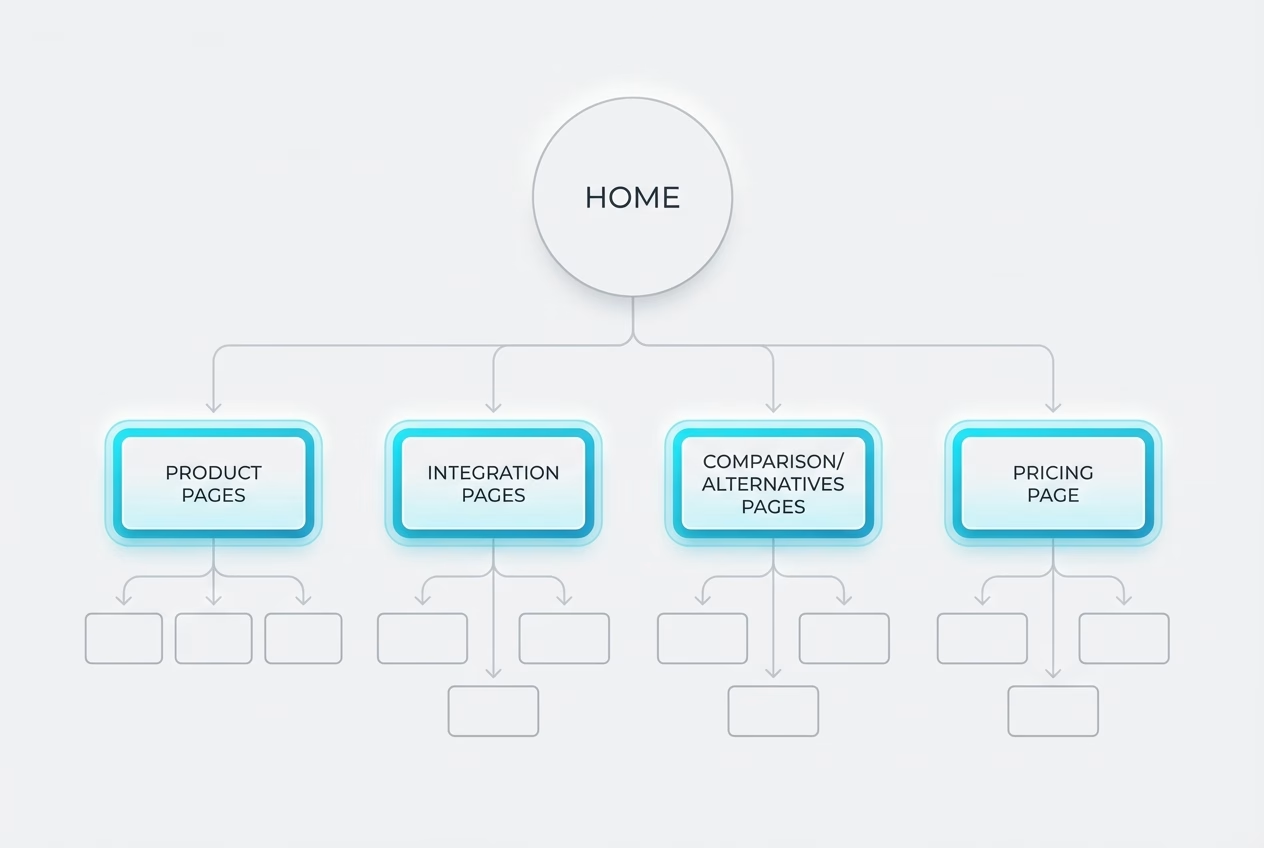
Page type is strategy. SERPs for bottom-of-funnel SEO queries reward purpose-built high-intent SEO pages (products, integrations, comparisons, pricing), not long-form thought leadership.
Start where intent naturally pools. These page types attract buyers who are already comparing vendors, validating fit, or preparing to convert—exactly the audience that high-intent SEO pages are designed to serve.
Product and feature pages (use-case-driven)
Your core product and feature pages are often your most under-optimized assets. The shift is to write them around use cases and outcomes, not just capabilities—because evaluation searches usually include a problem (“automate approvals”) or a role (“for RevOps”).
Strong product page SEO also depends on internal links from supporting content (guides, docs, and relevant blog posts). That internal relevance helps rankings while also guiding users toward conversion paths that make sense for their stage.
Integration pages cater to tool and tool searches.
Integration pages capture “tool + tool” searches that signal active stack planning. These visitors aren’t browsing; they’re asking, “Will this fit into what we already run?” That’s commercial intent with a clear conversion path.
To convert, integration pages should explain what syncs, how setup works, what permissions are required, and what results users can expect. A short implementation overview can do more for conversion rate optimization than another paragraph of feature marketing.
Comparison, alternatives, and “vs” pages
“Vs” and alternative pages are where buyer journeys accelerate. These SERPs often include vendor pages because Google recognizes the searcher is evaluating options, not learning basics. If these pages remain unpublished, third parties could potentially define the comparison.
Example: A SaaS company selling an API monitoring platform publishes “Datadog alternatives for API monitoring” and focuses the page on the buyer’s constraints: alert noise, cost at scale, and setup time. The page links to the product feature that solves each issue, then offers a “See a live demo” CTA for teams that need stakeholder buy-in.
Pricing and packaging pages (when to index and how)
Pricing is often the highest-intent page on the entire site, but many teams hide it from search or leave it too thin to rank. Indexing can be a competitive advantage when your pricing page answers packaging questions better than review sites do.
If pricing is complex, you can still rank by focusing on how plans differ, who each tier is for, what’s included, and what procurement needs (billing terms, security, SLAs). When you do gate specifics behind a sales conversation, be transparent about what buyers can expect next.
Keyword Research for High Intent (A Repeatable Process)
Making assumptions about bottom-of-funnel keywords for B2B software is the quickest way to publish pages that never convert. The better approach is to combine intent modifiers, SERP patterns, and pipeline feedback so you can predict which queries will produce leads—not just impressions.
This phase is also where high-intent SEO pages separate from generic SEO landing pages. You’re not just choosing keywords; you’re choosing buying scenarios and aligning them to the page that can best satisfy search intent and drive action.
- Please compile a list of the top 3–5 jobs that customers typically purchase.
- For each job, map the personas involved (economic buyer, champion, security, and ops) and the questions they must answer.
- Build a keyword set using intent modifiers like “pricing,” “integrations,” “vs,” “alternatives,” “for {industry},” “SOC 2,” and “implementation.”
- Validate intent with SERP analysis: check whether results are product pages, comparison pages, or listicles, and match your page type accordingly.
- Prioritize by potential conversion value: choose terms tied to your best-fit segments, not just the highest volume.
- Assign one primary query per page and plan supporting internal links to avoid overlap.
Building a BOFU keyword map by persona and job-to-be-done
A BOFU map becomes practical when each cluster has an owner page type. For example, “{product} for RevOps” might belong to a use-case product page, while “{product} SOC 2” might belong to a trust hub section linked from every conversion path.
When teams ask how to create high-intent SEO pages for SaaS, this mapping is usually what’s missing. Without it, you publish pages that compete with each other and confuse both users and search engines.
Qualifying intent with SERP analysis and modifiers
SERP analysis serves as a crucial tool for validating your content. If Google is ranking comparison pages for a query, an informational blog post is unlikely to win—and even if it did, it would often underperform on conversions because the user wants to evaluate, not read a tutorial.
Modifiers help you predict conversion behavior. “Alternatives” implies switching or dissatisfaction, “vs” implies a shortlist, and “pricing” implies readiness to act. Those are the moments when high-intent SEO pages can outperform paid ads on efficiency because the buyer is already self-motivated.
Avoiding cannibalization across products, blogs, and landing pages
Cannibalization happens when multiple URLs target the same intent, and Google can’t tell which to rank. It also happens when the blog tries to “cover” everything, leaving product pages thin and underlinked. The fix is intentional separation: blog posts can educate and internally link, while conversion pages own the commercial query.
Keep one page as the canonical answer for each bottom-of-funnel SEO theme. Then use internal links to funnel context from supporting content to that page, reinforcing both rankings and conversion paths.
High-Intent Page Template (What to Include)
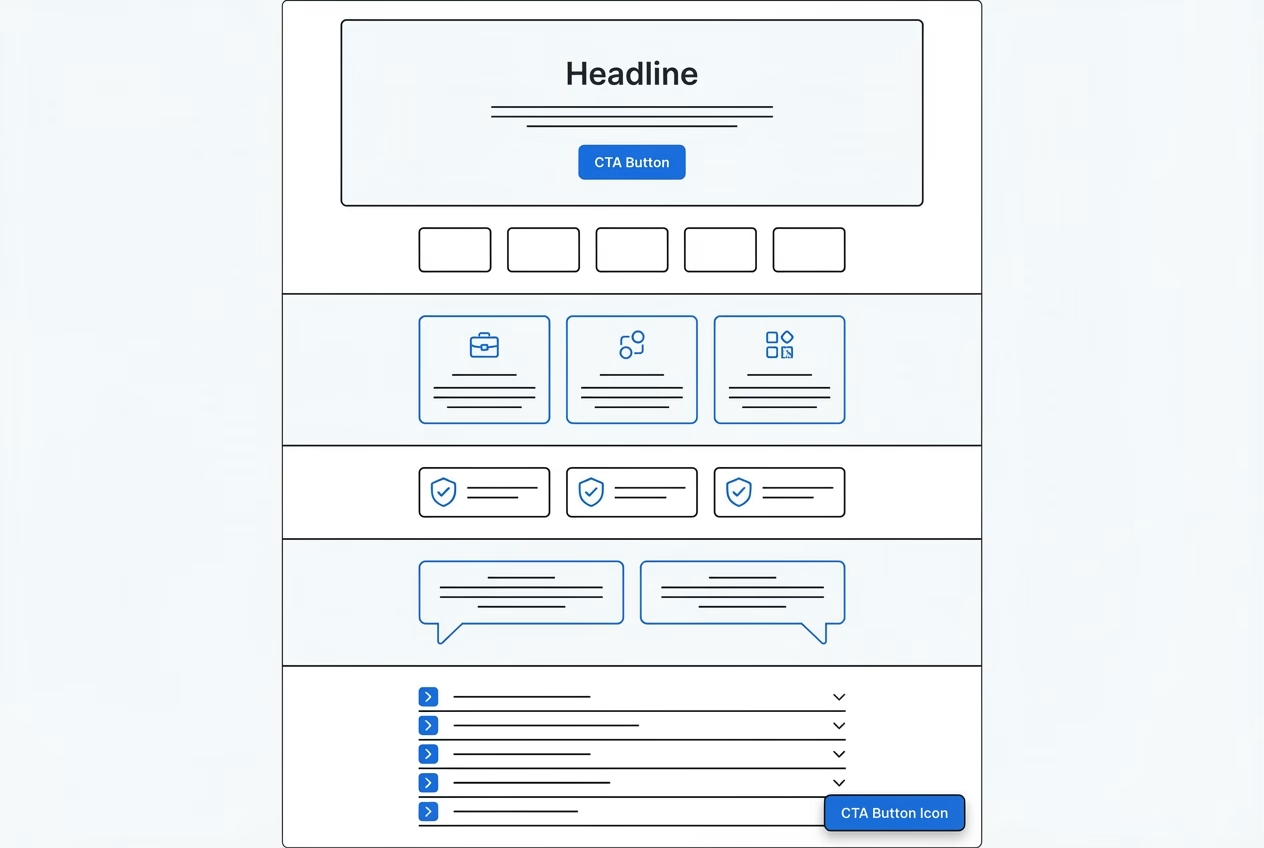
A high-intent SEO page template for conversions isn’t about adding more sections—it’s about placing the right information in the right order. Evaluation-stage users skim fast, looking for fit, proof, and the smallest possible next step.
Think of the page like a sales conversation that respects time. It should open with a clear promise, earn trust with evidence, and then answer objections before the user has to hunt for details in documents or PDFs.
Above-the-fold: value prop, proof, and primary CTA
Above the fold, say what the product does, who it’s for, and why it’s different in one tight message. Pair that with one strong proof point—logos, a quantified outcome, or a recognizable compliance badge—so the CTA feels safe to click.
Your primary CTA should match intent. If the search suggests high consideration (pricing, vs, alternatives), a demo or “talk to an expert” often outperforms a generic newsletter signup because it respects the user’s urgency.
Decision content: use cases, requirements, and outcomes
Decision content is where you earn the conversion. Use cases should be framed around outcomes (“reduce manual QA time”) and constraints (“works with your existing CI pipeline”), because buyers need to picture implementation in their environment.
If you’re wondering how to optimize product pages for SEO and signups, the key is often to add the missing details that sales representatives repeat during calls. Having those answers on the page transforms the CTA into a next step rather than a blind trust.
Trust builders: security, compliance, testimonials, case studies
Trust isn’t a footer badge; it’s a conversion requirement. Security and compliance details matter because B2B stakeholders will block progress if they can’t validate risk. Put the essentials on the page and link deeper into your security docs where appropriate.
Social proof should feel relevant, not generic. Use testimonials that match the page’s intent (industry, role, or use case) and include specific outcomes when possible so the proof supports the buying scenario that brought the visitor in.
Objection handling: FAQs, migration, implementation timeline
Objections are predictable: switching cost, time-to-value, integrations, and “will this work for us?” Address them directly with short sections that explain migration steps, typical timelines, and who owns what during implementation.
This phenomenon is where high-intent SEO pages quietly outperform paid campaigns. Ads can create urgency, but pages that reduce perceived risk win the conversion—especially in multi-stakeholder deals.
On-Page SEO + CRO: Make the Page Rank and Convert
Ranking and conversion aren’t competing goals when intent is right. On-page SEO helps the page get discovered, while conversion rate optimization helps the right visitors take action. The mistake is treating CRO as a last-minute redesign instead of a content decision that starts at the headline.
If your high-intent SEO pages aren’t performing, look for mismatches: the title promises one thing, and the page delivers another; the CTA is too early or too demanding; or the page lacks proof for a skeptical B2B buyer.
Title tags, headings, internal links, and schema basics
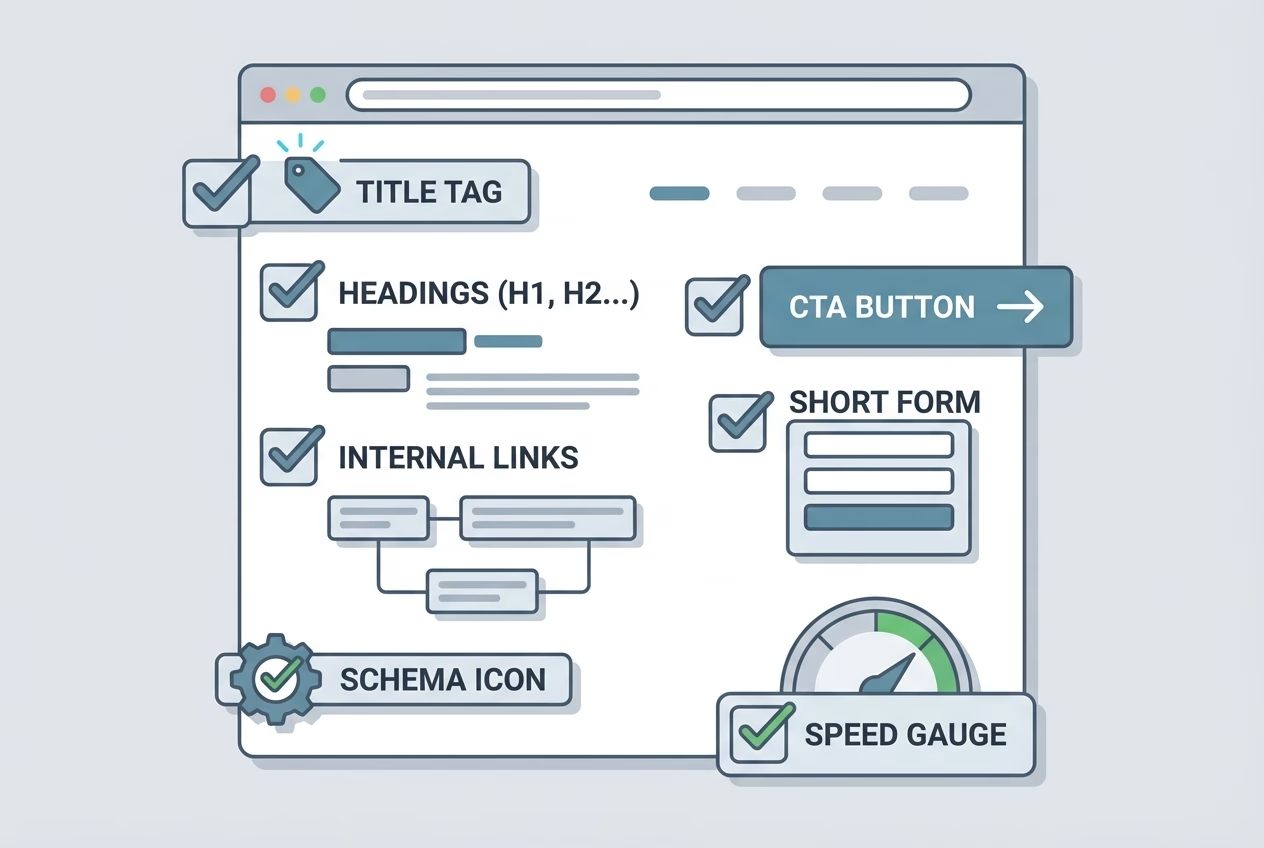
Start with a title tag reflecting the commercial query and setting expectations (what it is, for whom, and why it matters). Use headings to mirror buyer questions and add internal links from related articles and docs.
Schema helps improve visibility: Using FAQ schema correctly, product schema when needed, and organization signals make it clearer what the content is about, especially when there are several SEO pages aimed at similar user needs
CTAs, forms, friction reduction, and UX for evaluation-stage users
The best CTA matches the commitment level. For high-consideration searches, “request a demo” or “talk to sales” often wins; for product-led motions, a trial works if activation is fast.
Reduce friction with fewer form fields, clear privacy language, and secondary CTAs for visitors not ready to talk (“view integrations,” “see security overview”). Small UX details—sticky CTAs, scannable sections, quick load times—decide whether bottom-of-funnel SEO traffic turns into pipeline.
Technical considerations: speed, indexation, and duplicate handling
Technical health protects traffic from friction. Slow pages increase bounce; messy indexation prevents high-value URLs from ranking.
Be deliberate about indexation and variants. For similar pages (regions, industries, segments), use canonical tags and consistent internal linking so search engines understand the primary version without diluting relevance.
Measurement and Iteration
Traffic is a leading indicator, not the goal. Measuring high-intent SEO pages means proving they influence leads and revenue, including when the buyer returns later through direct or paid channels. That’s why “rankings improved” is not a complete success story for BOFU work.
The right measurement approach connects three layers: page engagement (are buyers finding what they need), conversions (are they taking the next step), and pipeline impact (are those leads qualified and moving). When you instrument those layers, iteration becomes obvious instead of political.
Tracking: organic leads, demo requests, assisted conversions
To understand how to measure conversions from organic traffic, you need consistent definitions. Track primary conversions (demo requests, trials, contact forms), micro-conversions (pricing views, integration clicks, security-page visits), and assisted conversions where organic was an earlier touch.
Then connect those conversions to CRM outcomes: SQL rate, sales cycle length, and influenced pipeline. This is where high-intent SEO pages often surprise teams—fewer sessions can produce more revenue because the traffic is closer to a decision.
Testing: copy, CTAs, social proof, and page layout
Iteration should focus on the decision bottleneck. If people scroll but don’t convert, test the offer and CTA. If they convert but leads are weak, adjust qualification messaging and add clearer “who it’s for” language.
Example: A B2B analytics tool sees strong rankings on its integration page but low demo submissions. They swap the generic CTA for “Book a 15-minute integration walkthrough,” add a short setup timeline, and conversions rise because the ask matches the visitor’s intent and reduces uncertainty.
Next Steps / CTA
If you want organic traffic to drive pipeline, stop treating BOFU pages as a “later” project. Build a small set of high-intent SEO pages covering the highest-value buying journeys, then improve based on real conversion data.
Practical starting point: align sales, product marketing, and SEO on a short list of intents: core use cases, top integrations, top competitors, and pricing questions. Once live and internally linked, broader content supports them rather than competing with them.
Please develop a 10-page high-intent SEO plan and aim to deliver the first 3 pages within 30 days. Commit to momentum. Pick three pages where intent is unmistakable (often an integration, comparison, or use-case product page), publish with strong internal linking, and review performance weekly for 30 days. Then expand to ten pages covering the majority of evaluation-stage searches.
FAQ
Are high-intent SEO pages the same as landing pages?
Not exactly. High-intent SEO pages are built to rank and convert for specific keyword intent, while landing pages are often campaign-driven and may not be designed for long-term organic discovery.
Should pricing pages be indexed for SEO?
Often, yes—especially if buyers search your brand plus “pricing” or compare your cost model. Indexing works best when the page explains packaging, inclusions, and buying steps, not just a price grid.
How many high-intent pages should a SaaS company publish first?
Start with 3, then expand to 10. Three gives you enough signal to learn what converts, while ten usually covers the highest-value bottom-of-funnel SEO themes across use cases, integrations, and comparisons.
What’s the best CTA for a high-intent SEO page (demo, trial, contact)?
Match the CTA to the buying motion and query intent. “Demo” often wins on comparisons and pricing; “trial” can win on use-case pages if activation is quick and the product is self-serve.
How long does it take high-intent SEO pages to start converting?
You may see early conversions within weeks if you already have authority and the query is truly commercial, but consistent results often take 6–12 weeks as rankings stabilize and internal links accumulate.
Could you please share how you identify and confirm bottom-of-funnel keywords without relying on guesswork?
Use intent modifiers, SERP patterns, and sales-call language, then confirm with ranking page types and what Google is already rewarding. If the SERP is full of product and comparison pages, treat that as your cue to build one.
Which page types usually convert best for B2B SaaS?
Pricing, comparisons/alternatives, and integration pages typically show the strongest conversion rates because they capture evaluation-stage keyword intent. Writing product pages around use cases and requirements can also enhance their performance.
How should teams measure success beyond traffic?
Tie high-intent SEO pages to demo requests, trial starts, assisted conversions, and the influence pipeline in your CRM. If conversions rise but lead quality drops, adjust messaging to better qualify who the product is—and isn’t—for.
If you want help prioritizing the first set of high-intent SEO pages, build your BOFU keyword map and align each cluster to a specific page type before writing. That single step prevents wasted pages and makes results easier to measure.