
SEO visibility after AI Overviews has fundamentally changed how we evaluate organic performance. Stable rankings no longer guarantee traffic when Google’s AI summaries resolve intent directly on the SERP. Many teams now see shrinking organic sessions even as impressions hold steady or increase.
At Stremeline Digital, we’ve helped B2B companies recalibrate measurement and optimization strategies after AI Overviews became prominent. The core insight: SEO visibility after AI Overviews is no longer just clicks—it’s a blended view of earned presence, query coverage, brand authority, and downstream revenue influence.
This guide shows exactly how to measure SEO visibility after AI Overviews, which KPIs matter most, and what content/technical actions protect performance in an AI-first search landscape.
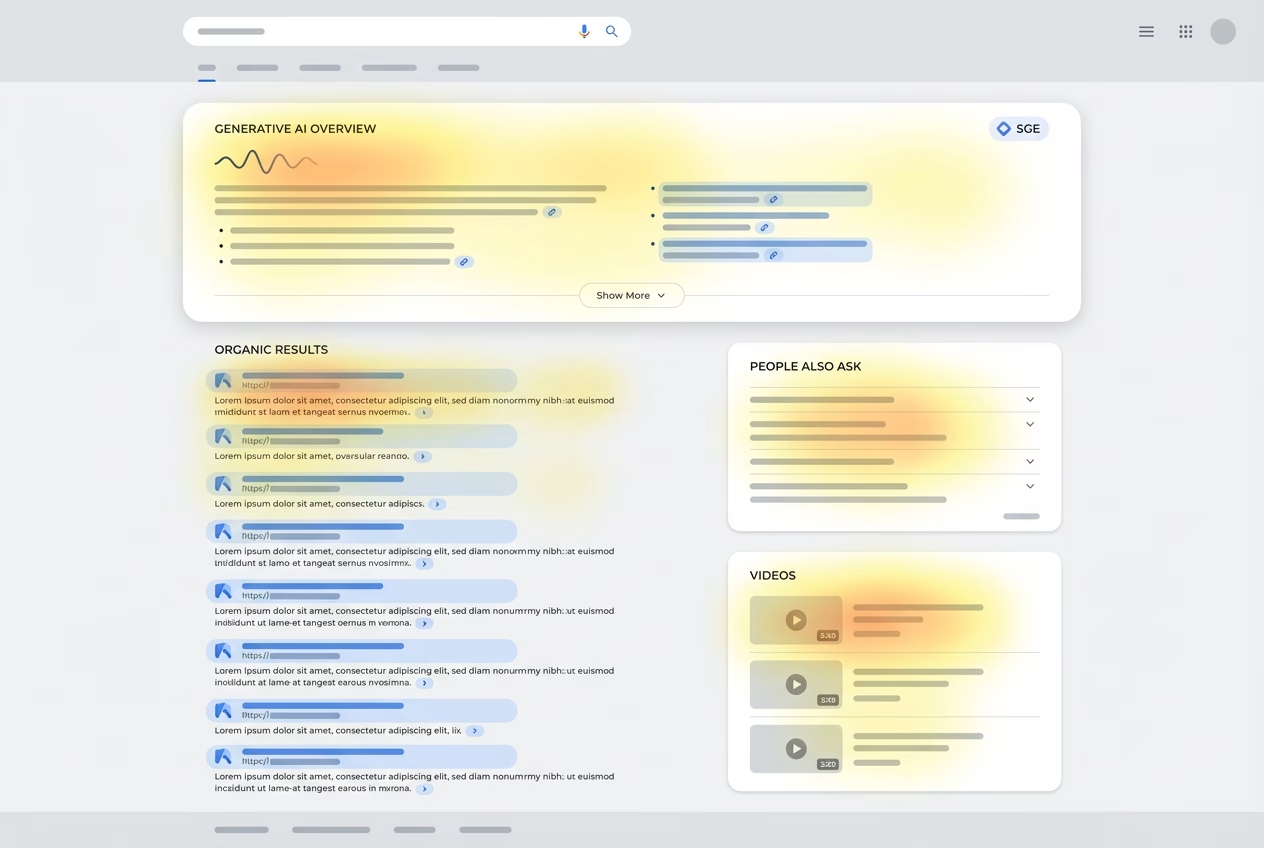
What AI Overviews change in the search journey
AI Overviews compress the top-of-funnel experience. Users receive synthesized answers without leaving the SERP, clicking only when they need deeper validation, vendor-specific details, or task completion.
This feature makes early-stage informational queries feel “lost” in traditional reporting, even though brand exposure may actually increase.
Where Clicks Go: Overview vs Organic Results vs Other SERP Features
When an overview appears, it competes directly with classic organic positions and often stacks with People Also Ask, video carousels, top ads, and local packs. Users scroll less and compare fewer blue links.
In practice, expect CTR to drop for informational queries even if the average position remains strong. Impressions may rise as Google broadens its query matching, but organic traffic softens because fewer users need to click through.
Why B2B impact can look worse (longer research cycles, fewer immediate clicks)
B2B buying cycles span weeks or months. AI Overviews accelerate early education without generating immediate site visits. This makes SEO visibility after AI Overviews feel less direct-response, even though it may still drive branded return searches and pipeline influence later.
In short: clicks decline, but influence often persists—just through a longer, more indirect path. This is why SEO visibility after AI Overviews requires new measurement approaches, not panic.
Redefining “Visibility” for AI-First SERPs
Traditional visibility = clicks + position. AI-first SERPs break that equation, so SEO visibility after AI Overviews must reflect presence and influence even when the click becomes conditional.
Treat search as earned touchpoints across the journey. The real question: How often do we appear for valuable queries with enough authority that users (or the AI) recognize us as credible?
Core Visibility Metrics: Impressions, Average Position, Query Coverage, Brand Presence
- Impressions remain the widest exposure signal—track them closely when clicks fall.
- Query coverage shows breadth (how many high-intent queries you appear for).
- Average position still matters, but pair it with SERP feature presence.
- Brand presence (branded impressions + branded search growth) captures awareness that doesn’t convert immediately.
These four form the foundation of SEO visibility after AI Overviews.
Business Metrics: Pipeline Influence, Assisted Conversions, Return Visits
When clicks soften, revenue metrics become the truth layer. Assisted conversions, view-through influence, and return visits (especially branded) often reveal a stronger contribution than last-click data.
This is how you protect budgets: show leadership that SEO visibility after AI Overviews
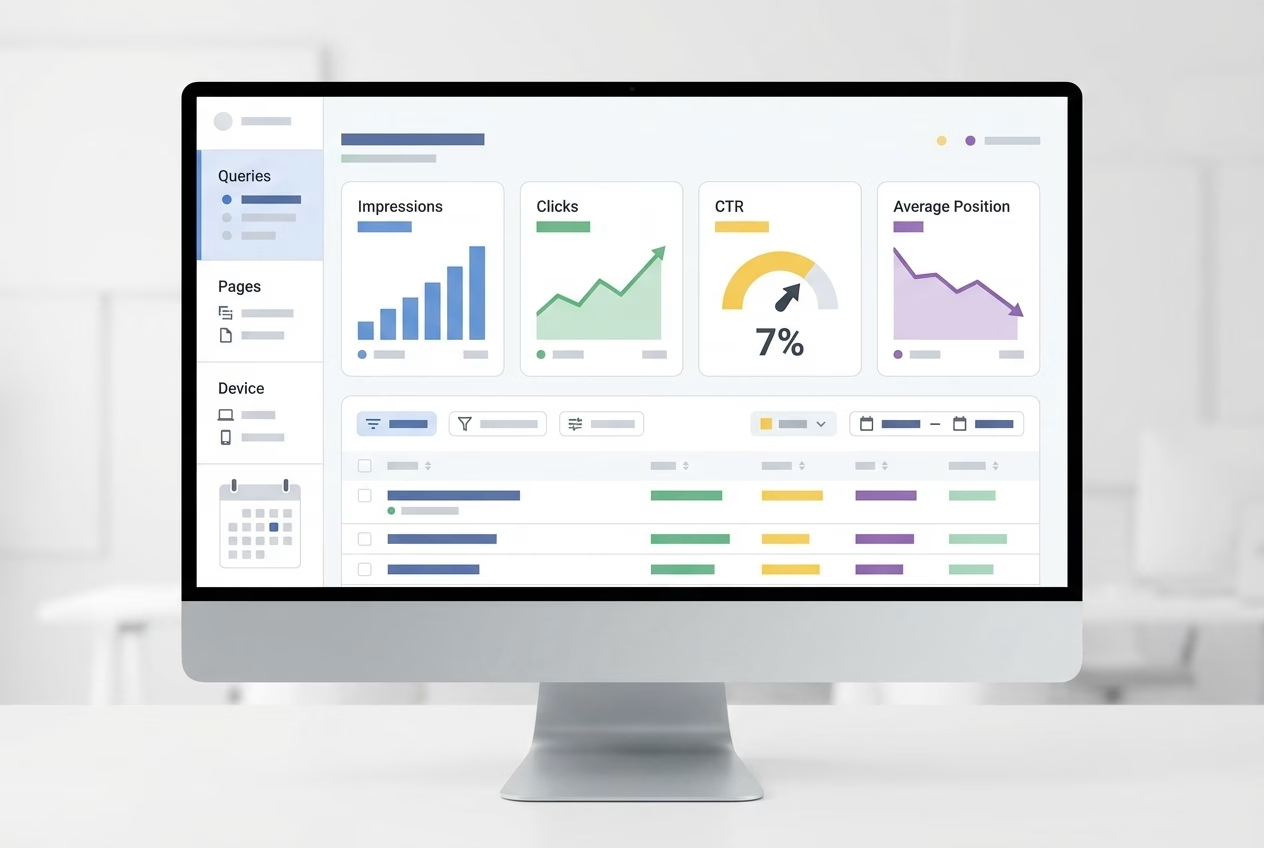
Step-by-step guide on measuring SEO visibility after AI Overviews.
Compare like-for-like: same topics, same intent, same time windows before/after overviews. Build a controlled set of “money queries” and “supporting queries,” then track visibility and outcomes.
Google Search Console: Segmenting Queries, Pages, Devices, and Time Ranges
Search Console shows the symptoms: impressions may rise, CTR may fall, and position may hold. Insight comes from segmentation.
Practical steps:
- Set pre/post date comparison (e.g., last 28 days vs previous).
- Export performance by query and page.
- Segment by intent (informational vs. commercial) and device (mobile often sees sharper CTR drops).
- Filter for queries with likely overviews—spot-check incognito to confirm.
- Track clusters (hub + supporting pages) to see topic-level shifts.
Example: A cybersecurity firm sees “zero trust framework” impressions +18% but CTR -42%. Desktop CTR is stable, while mobile drops sharply—classic overview behavior on mobile.
Analytics/CRM: Connecting Landing Pages to Revenue and Assisted Attribution
Analytics shows post-click behavior; CRM closes the loop.
Steps:
- Map landing pages to mid-funnel events (demo view, pricing page, contact form).
- Compare conversion rate and assisted conversions across windows.
- In CRM, track the influencer pipeline for organic first-touch or notable-touch sessions.
- Report combined trend: visibility up, clicks down, and pipeline stable or growing.
This demonstrates that SEO visibility after AI Overviews still contributes, albeit in a different manner.
How to protect and grow performance
Protection starts by accepting the new trade: some queries will send fewer clicks, but the remaining clicks can be higher-intent if your page is clearly differentiated. Your job is to make the page the best “next step” after the overview—either because it goes deeper, proves credibility, or helps users act.
Growth comes from expanding query coverage and strengthening signals that make your brand easy to cite. If you want stronger SEO visibility after AI Overviews, you need content that’s unambiguous, entity-rich, and rooted in verifiable specifics.
Content actions: intent match, entity coverage, concise answers
AI summaries reward clarity. Pages that open with a direct answer, define key entities, and support claims with concrete details are easier to interpret and more likely to be referenced than pages that bury the point under marketing language.
At the same time, you still need a reason for a human to click. Unique data, a point of view, original frameworks, and examples of outcomes (without fluff) make the page valuable beyond what an overview can summarize.
- Write a tight answer near the top, then expand with depth so both skimmers and evaluators are served.
- Cover the core entities and subtopics users expect, using consistent terminology across your cluster.
- Add original research, benchmarks, or firsthand observations that can’t be replicated from generic sources.
- Refresh intros and headings to match the real query intent you’re earning impressions for.
Technical and SERP actions: structured data, internal linking, index hygiene
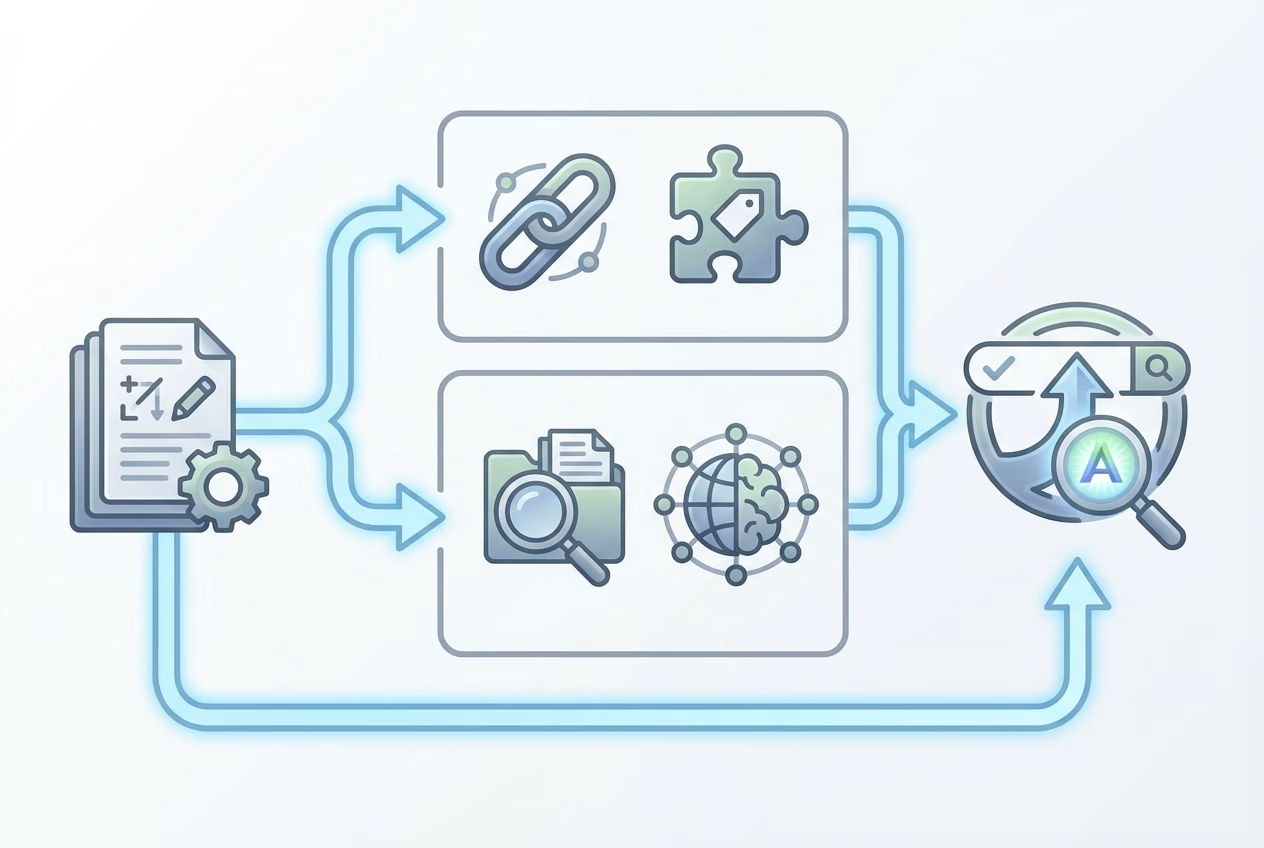
Technical signals don’t replace content quality, but they reduce ambiguity. Clean indexation, strong internal linking, and relevant structured data help search systems understand what your page is about and how it relates to adjacent topics.
Also watch for cannibalization: multiple pages competing for the same intent can dilute both rankings and perceived authority. Consolidating overlapping pages can improve SEO visibility after AI Overviews by making one definitive resource more likely to be surfaced and cited.
How to report results to leadership
Leadership doesn’t need a SERP lecture—they need a stable scorecard. Frame the story as an ecosystem change: attention is being redistributed, so the team is updating measurement to track influence, efficiency, and revenue contribution.
Make the narrative concrete: clicks may drop on certain informational topics, but you’re protecting demand capture by increasing impressions, improving conversion quality, and proving an assisted pipeline. This is the most defensible way to communicate SEO visibility after AI Overviews without sounding like you’re moving the goalposts.
A Practical Dashboard: Visibility, Efficiency (CTR), and Business Outcomes
Keep it small:
- Visibility panel: impressions, query coverage, average position
- Efficiency panel: CTR, engagement rate
- Outcomes panel: assisted conversions, influenced pipeline, branded return visits
Example: Non-branded clicks -12%, impressions +22%, demo assists +9%. Takeaway: SERP answers more questions, and organic still creates opportunities.
Setting Realistic Targets and Experiments for the Next Quarter
Focus on what you control:
- Expand query coverage
- Recover CTR on high-value terms
- Improve conversion rate from remaining traffic
Run experiments: refresh high-impression pages, improve internal linking, and measure combined shifts. These become repeatable levers for SEO visibility after AI Overviews.
FAQ
These quick answers help align teams when reporting changes caused by AI Overviews. Use them to set expectations across marketing, product, and sales.
When in doubt, anchor your response in consistent segmentation and trend-based reporting rather than single-query anecdotes.
Can AI Overviews reduce organic traffic even if rankings stay the same?
Yes. The overview can satisfy intent on SERP, lowering CTR while your average position looks stable, which is why SEO visibility after AI Overviews should be evaluated with impressions and business outcomes alongside clicks.
How do I know if my site is appearing in AI Overviews?
In Search Console, look for query groups with rising impressions and falling CTR, then manually spot-check those queries in an incognito browser to confirm an overview is present and whether your brand or page is referenced.
Should we change our keyword strategy because of AI Overviews?
Adjust, don’t abandon. Prioritize terms where you can add unique value (data, tools, strong POV), and balance overview-prone informational topics with commercial and “next step” queries that still drive action.
What content formats perform best when AI Overviews dominate results?
Pages that lead with concise answers and then deliver depth with clear structure, definitions, and evidence tend to hold up best. Original research, benchmarks, and decision-support assets (like comparison guidance) also earn more qualified clicks.
How do we prove SEO ROI if clicks are down but visibility is up?
Pair Search Console visibility (impressions, query coverage) with analytics and CRM outcomes such as assisted conversions and influenced pipeline. This connects SEO visibility after AI Overviews to revenue impact, even when last-click traffic declines.
What KPI changes should we expect when AI Overviews appear for our core queries?
Common shifts include lower CTR, steadier or higher impressions, and more variance by device (often sharper CTR drops on mobile). You may also see more branded return visits as users validate vendors later in the journey.
Next Steps / CTA
Start with the highest-impression queries and pipeline-tied pages. Confirm overview presence, refresh those pages to answer intent faster, and strengthen internal linking.
Lock in monthly reporting: segmented GSC + assisted outcomes. With that cadence, SEO visibility after AI Overviews becomes measurable, explainable, and improvable.
Are you prepared to reassess your SEO measurement in light of AI-first search?
At Stremeline Digital, we help B2B teams audit AI Overview impact, update content/technical signals, and report real influence to leadership.
Book a free 30-minute visibility audit. We’ll analyze your top queries, spot overview exposure, and show exactly where to protect performance.
Visit stremelinedigital.com or DM “AI AUDIT.”
Thanks for reading. Now open Search Console and ask, “Are we visible in AI Overviews, and are we measuring what actually matters?”
Follow Stremeline Digital for more AI-era SEO systems. #SEO #AIOverviews #SEOVisibility #OrganicTraffic #B2BMarketing #SEO visibility after AI Overviews